

We see it frequently in emerging markets. Local suppliers need capital to maintain operations, purchase inputs, and fulfill contracts, but they cannot secure financing because traditional banks consider their businesses high risk. Without capital, operations stall. Without a track record of stable operations, capital stays out of reach. It is a vicious cycle that compounds over time, widening a financing gap that limits economic stability for communities.
The Structural Reality of the Trade Financing Gap
To understand the current crisis, one must look at the shifting regulatory landscape for global Tier-1 banks. Under the Basel III framework, more stringent capital adequacy ratios and liquidity requirements have significantly increased the cost of maintaining trade finance portfolios. When coupled with the high operational costs of Know Your Customer (KYC) and Anti-Money Laundering (AML) compliance, small-ticket trade deals in emerging markets are often deemed “structurally unattractive.” The administrative cost of due diligence frequently outweighs the potential interest margin on the deal itself.
According to the Asian Development Bank (ADB), the global trade finance gap has surged to an unprecedented $2.5 trillion. This deficit disproportionately affects emerging economies in sub-Saharan Africa and Latin America, where local banking infrastructure is often unable to absorb the overflow from retreating global lenders.
The barrier to entry is particularly high for Small and Medium-sized Enterprises (SMEs). Data from the World Trade Organization (WTO) reveals a stark credit divide: while large multinational corporations see rejection rates as low as 7%, nearly 50% of SME trade finance applications are denied.
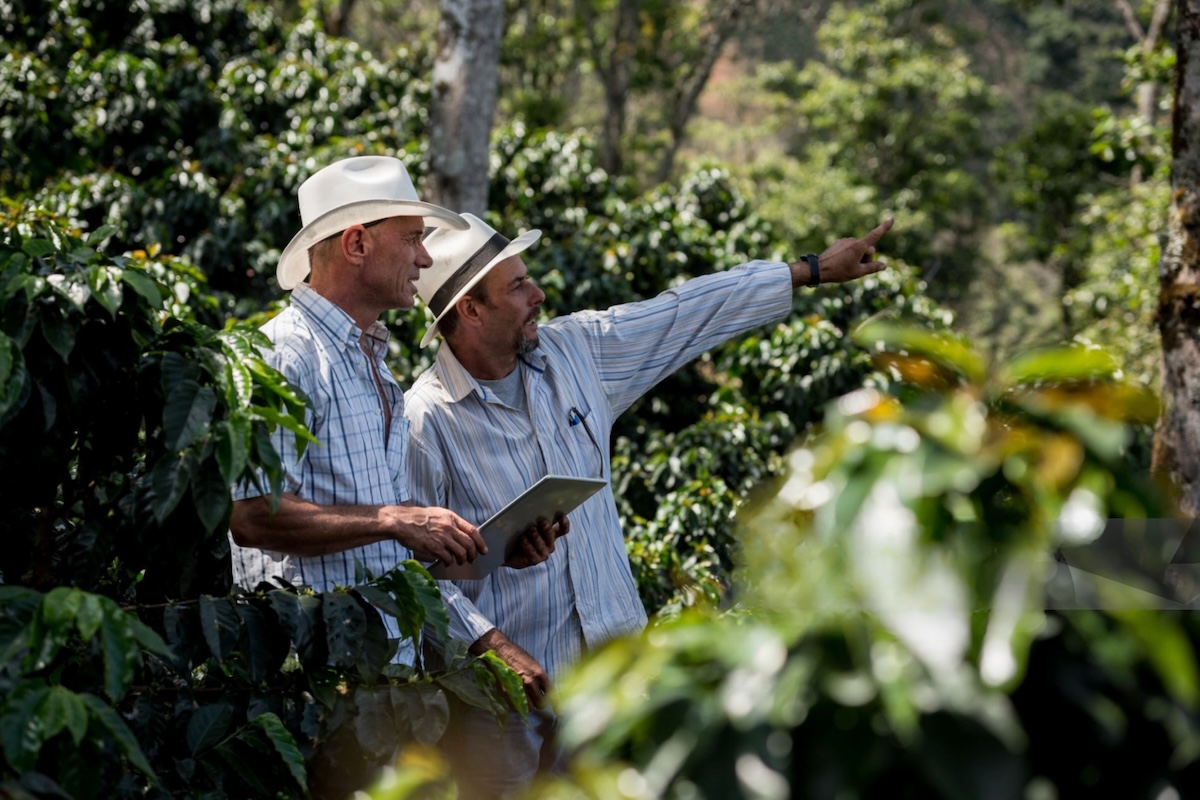
This gap translates into tangible economic erosion. In Colombia, for instance, the coffee sector produces an average of 12 million bags annually, yet it relies on a fragmented network of smallholder farmers. These farmers operate on razor-thin seasonal cash flows; when access to specialized “input financing” for fertilizers and labor narrows, the immediate result is a decline in production quality and yield, ultimately devaluing one of the nation’s most critical export commodities.
Who Fills the Financing Gap?
There are a few categories of capital providers that have moved into the space banks vacated. Through programs like the IFC’s Global Trade Finance Program, development finance institutions (DFIs) provide guarantees and risk-sharing structures that allow commercial banks to maintain trade books in markets they would otherwise exit. These instruments are valuable, but they aren’t designed for every situation. Smaller suppliers often lack the compliance infrastructure and collateral management systems that large banks now require as table stakes. Plus, approval timelines don’t always match the pace of commodity trade.
Private credit and alternative funds have expanded aggressively into trade finance, attracted by the yield premium. These lenders are selective, however, and typically require returns in the double digits, which compresses already thin trading margins.
Specialized advisory and trading firms like XTS Commodities are the most adaptive category. These firms understand the physical commodity space, from the players involved to the complex logistics and collateral frameworks that really work. They can price and structure transactions based on real-world experience. That sector-specific knowledge enables a higher risk tolerance in specific niches because the risks are genuinely better understood.
The EvoAgro and XTS Model in Practice
EvoAgro, Xtellus’ agricultural supply chain partner, developed an in-kind financing structure that addresses working capital gaps. Let’s jump back to Colombia. Through EvoAgro’s program, coffee farmers receive fertilizer upfront in exchange for future deliveries. This solves both their immediate input needs and their forward sales challenges. The in-kind financing structure also means that farmers get financing when they need it — in line with the coffee agricultural cycle — which reduces operational risks.
Once the crop is harvested, XTS Commodities applies its trading network to maximize export value across global distribution channels. This allows farmers to focus on growing quality coffee while our specialized traders manage the financial and logistical complexity of reaching international markets.
The New Capital Flow
Trade finance is now rebalancing capital flow away from traditional banks to specialized intermediaries. In this environment, sector expertise is the underwriting model. The firms best positioned are those with first-hand experience of the supply chain and strong relationships across borders. These are the firms that can move with the agility needed to accelerate growth and protect against risk.
Learn more about XTS Commodities’ expertise: https://xtscommodities.com/